Bathrooms
Curbless Showers: What to Know Before You Commit
MetroStyle Services 5 min read
Waterproofing, slope, and drain placement decide whether a curbless shower ages well. A quick primer before you finalise your bathroom design.
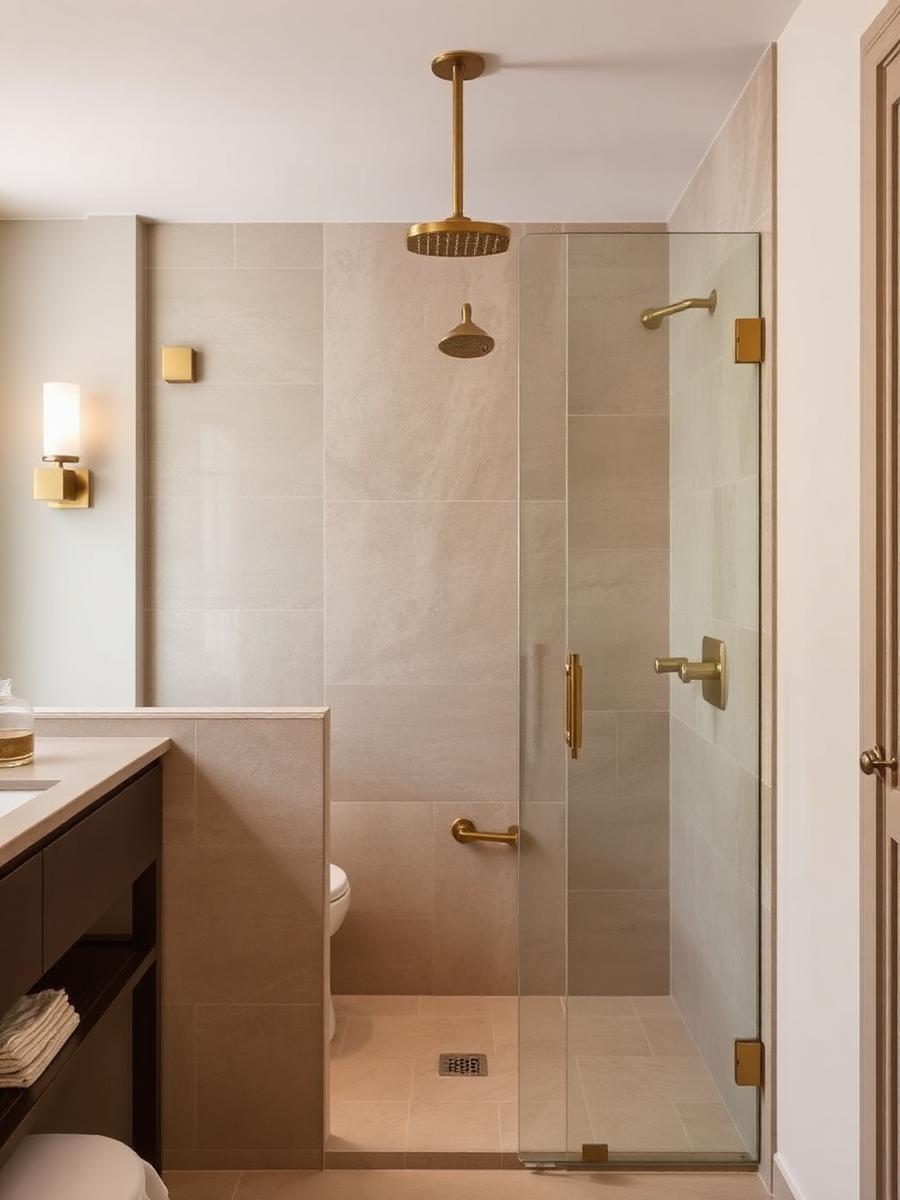
A curbless shower — sometimes called a zero-entry or wet-room shower — removes the raised threshold you normally step over. The floor runs continuously from the bathroom into the shower. It looks calm and modern, it makes a small bathroom read larger, and it is genuinely easier to use as you get older.
It is also the detail most likely to cause problems years later if it is built wrong. Here is what actually decides whether a curbless shower works.
Waterproofing is the whole job
With a curb, the curb is your last line of defence. Without one, the waterproofing membrane is the only thing standing between the shower and your subfloor. In South Florida that matters twice over: our humidity means anything that gets damp stays damp.
A properly built curbless shower uses a bonded waterproof membrane that extends well past the shower opening — typically the entire wet zone and a generous margin beyond it — with sealed corners, sealed drain flange, and sealed wall-to-floor transitions. Skipping the margin is the single most common shortcut, and it shows up as soft baseboards two years later.
Slope has to be built in, not tiled in
Water has to run to the drain without a curb holding it back. That means the shower floor needs a consistent slope, usually around a quarter inch per foot, and the surrounding floor needs to be dead flat or slope gently toward the shower rather than away from it.
In new construction the subfloor gets recessed so the finished floor stays level. In a remodel, especially on a concrete slab — which covers most South Florida homes and condos — the slab has to be cut and recessed, or the entire bathroom floor gets built up. Neither is exotic, but both need to be priced and planned up front, not discovered mid-demo.
Drain choice changes the tile layout
A linear drain along the back wall or the shower entry lets the floor slope in one direction only. That means you can use large-format tile in the shower, which is what most homeowners want, and it keeps grout lines to a minimum.
A traditional centre point drain requires the floor to slope from four directions, which forces small tile or mosaic in the shower pan. Both work. But the drain decision has to happen before you pick tile, not after.
Glass, splash, and how much you actually need
Curbless does not mean no glass. Most curbless showers still use a fixed glass panel to control splash, and many skip the door entirely. The size of the opening, the position of the showerhead, and whether you have a handheld all affect how much water leaves the shower zone.
A common and comfortable setup is a generous walk-in opening with one fixed panel and the showerhead aimed away from it. If the bathroom is small, or the shower is close to a vanity, a door earns its place.
Condo considerations
Many buildings across Broward, Palm Beach, and Miami-Dade restrict how much of the slab can be cut, and some require engineering sign-off before any recess. Work hours, elevator scheduling, and association approval all affect the timeline. We handle those approvals as part of the project, but they need to be started early.
Is it worth it?
For most homeowners, yes — provided it is built properly. A curbless shower typically adds a modest amount to a bathroom remodel over a standard curbed shower, mostly in slab work and waterproofing labour. What you get back is a bathroom that looks better, cleans more easily, and stays usable as your needs change.
What you do not want is the cheap version. A curbless shower built without proper membrane coverage and slope is not a design choice; it is a future repair.
Ready to take the next step? Explore Bathroom remodeling, browse our projects, or request a consultation. We serve Broward, Palm Beach, and Miami-Dade counties.
Questions